
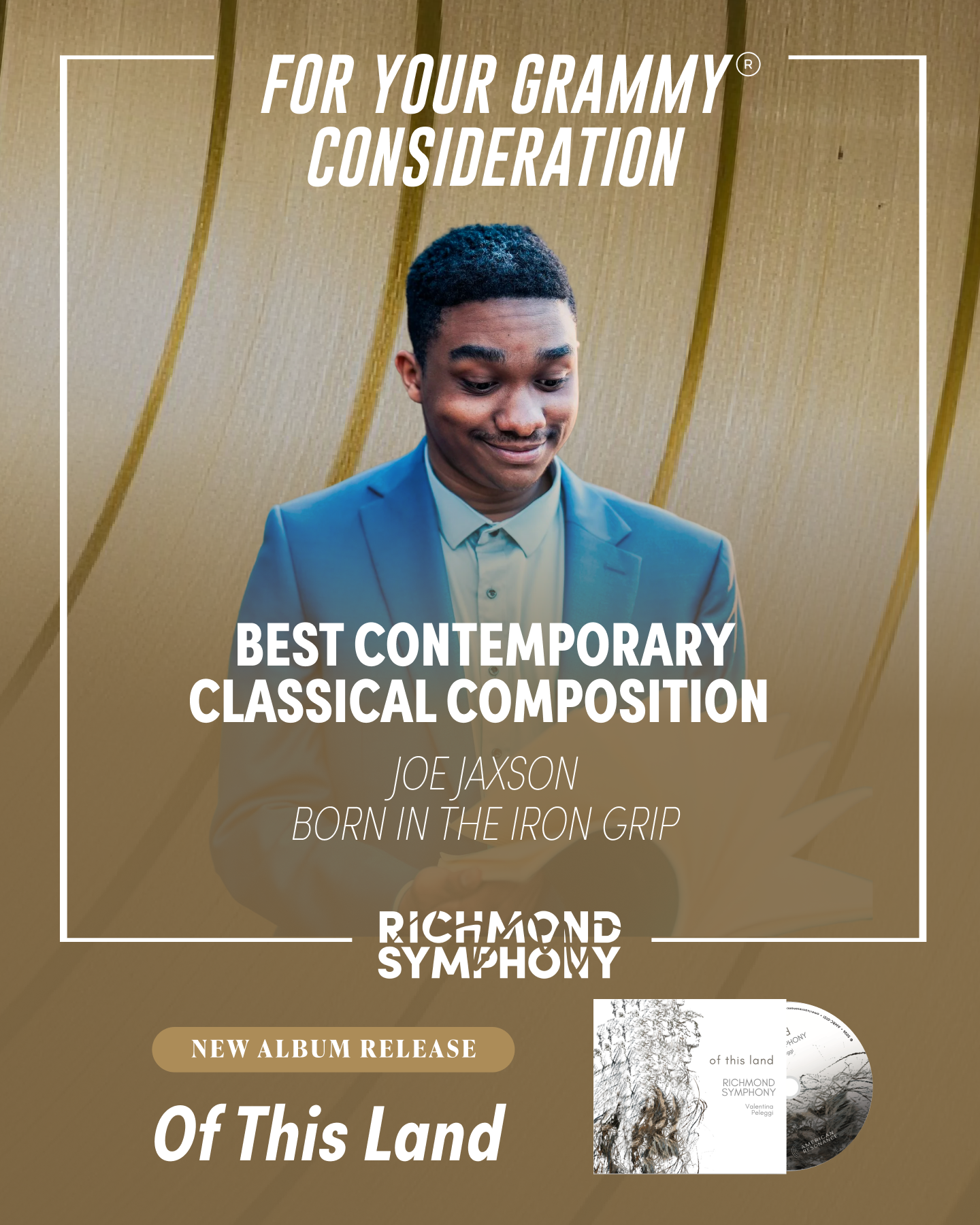
“Born in the Iron Grip”
from the album “of this land”
Joe Jaxson, Valentina Peleggi, and the Richmond Symphony
FYC: Best Contemporary Classical Composition
“Start where you are. Use what you have. Do what you can.”
– Arthur Ashe
“Born in the Iron Grip” is when your talents and passions combine to become a voice for leadership and social change.
In the Community
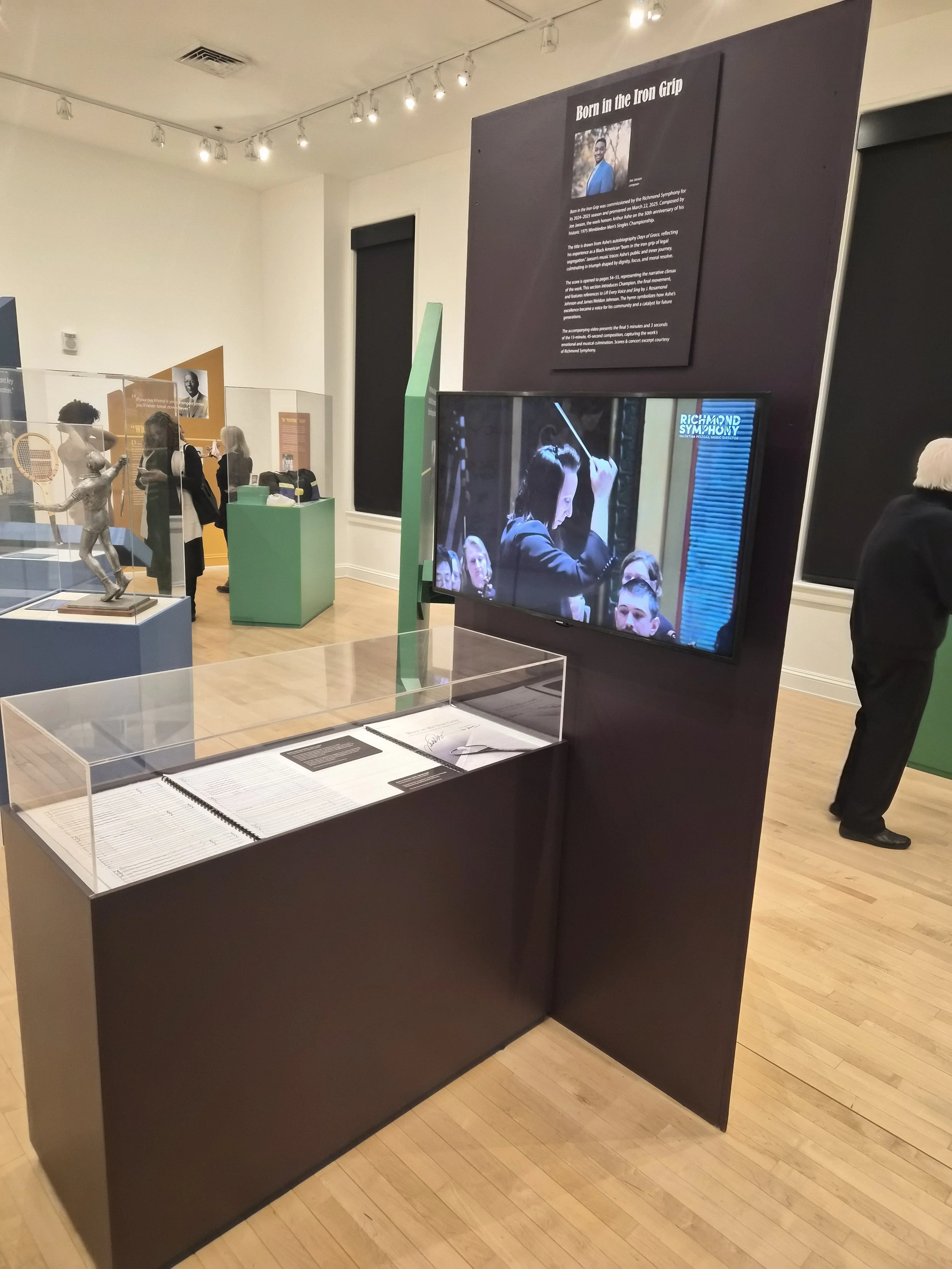
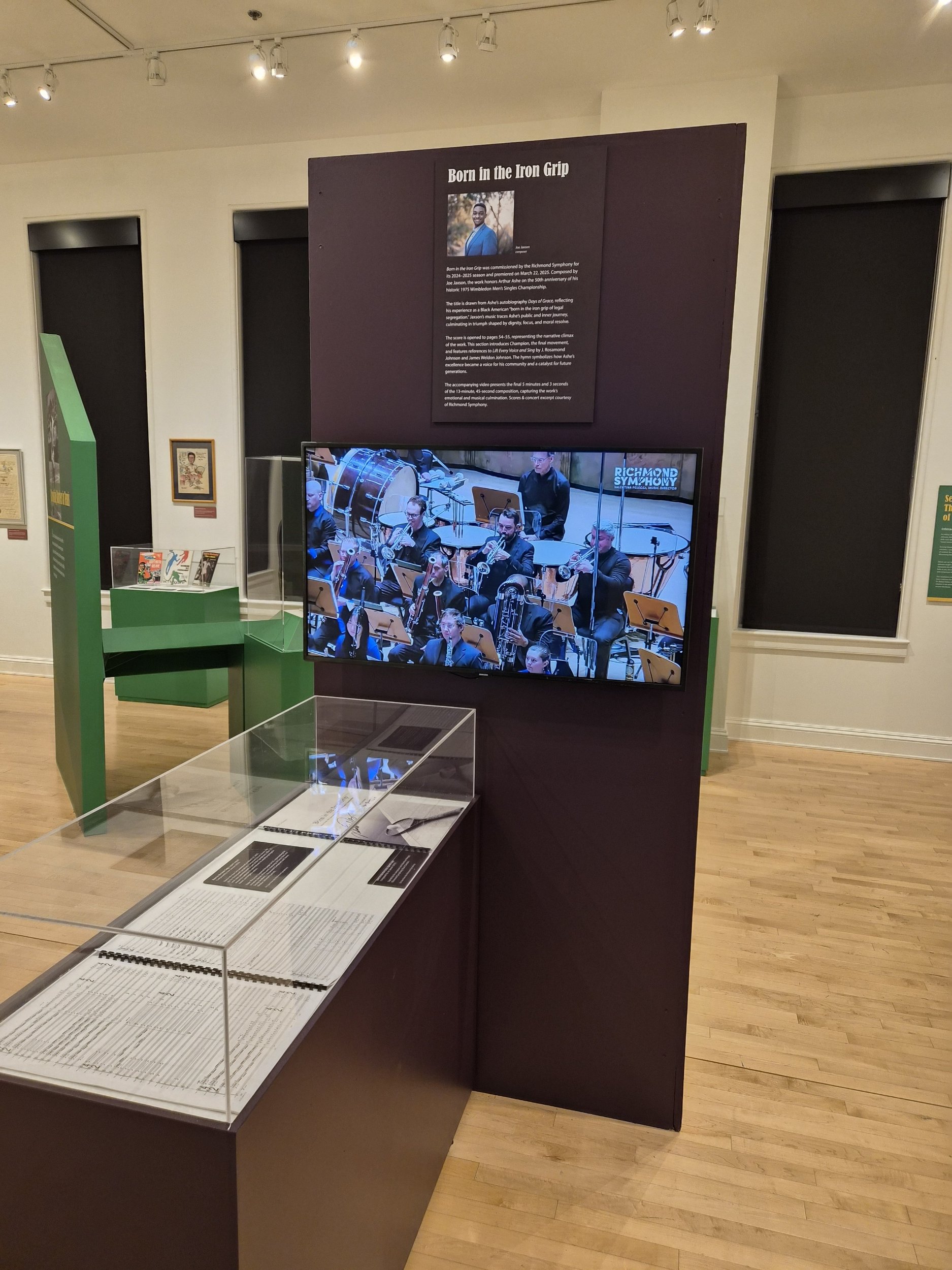
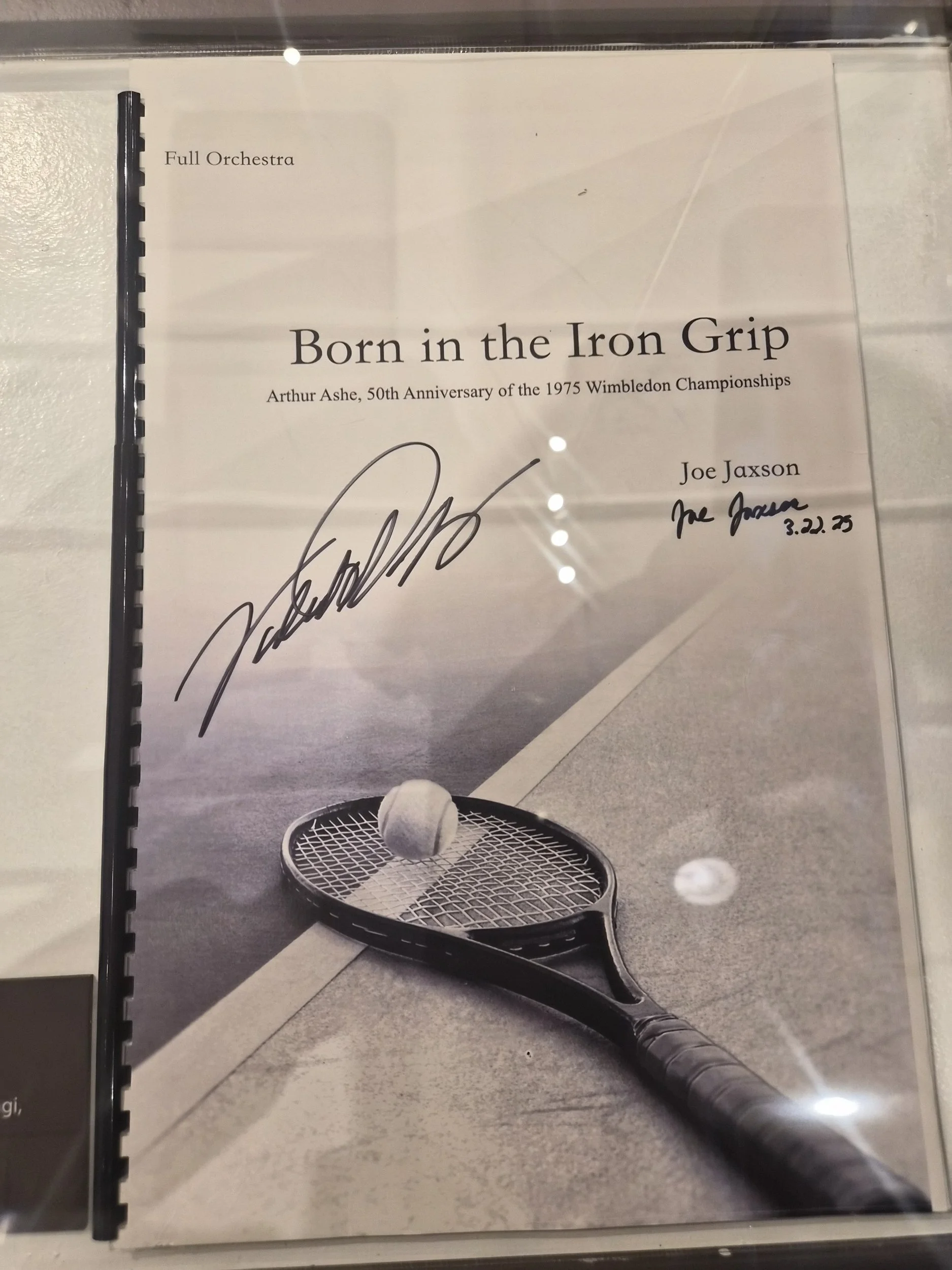
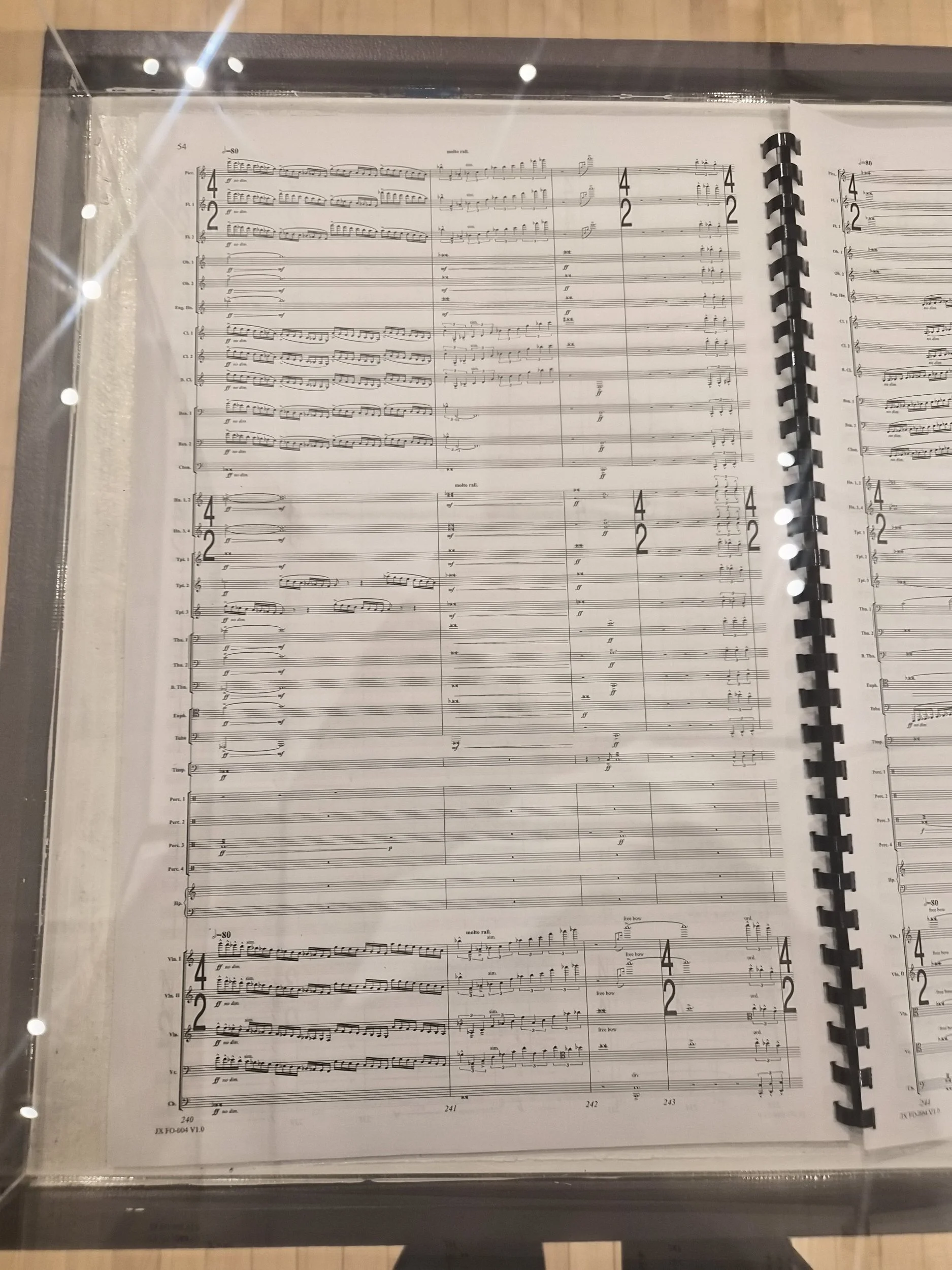
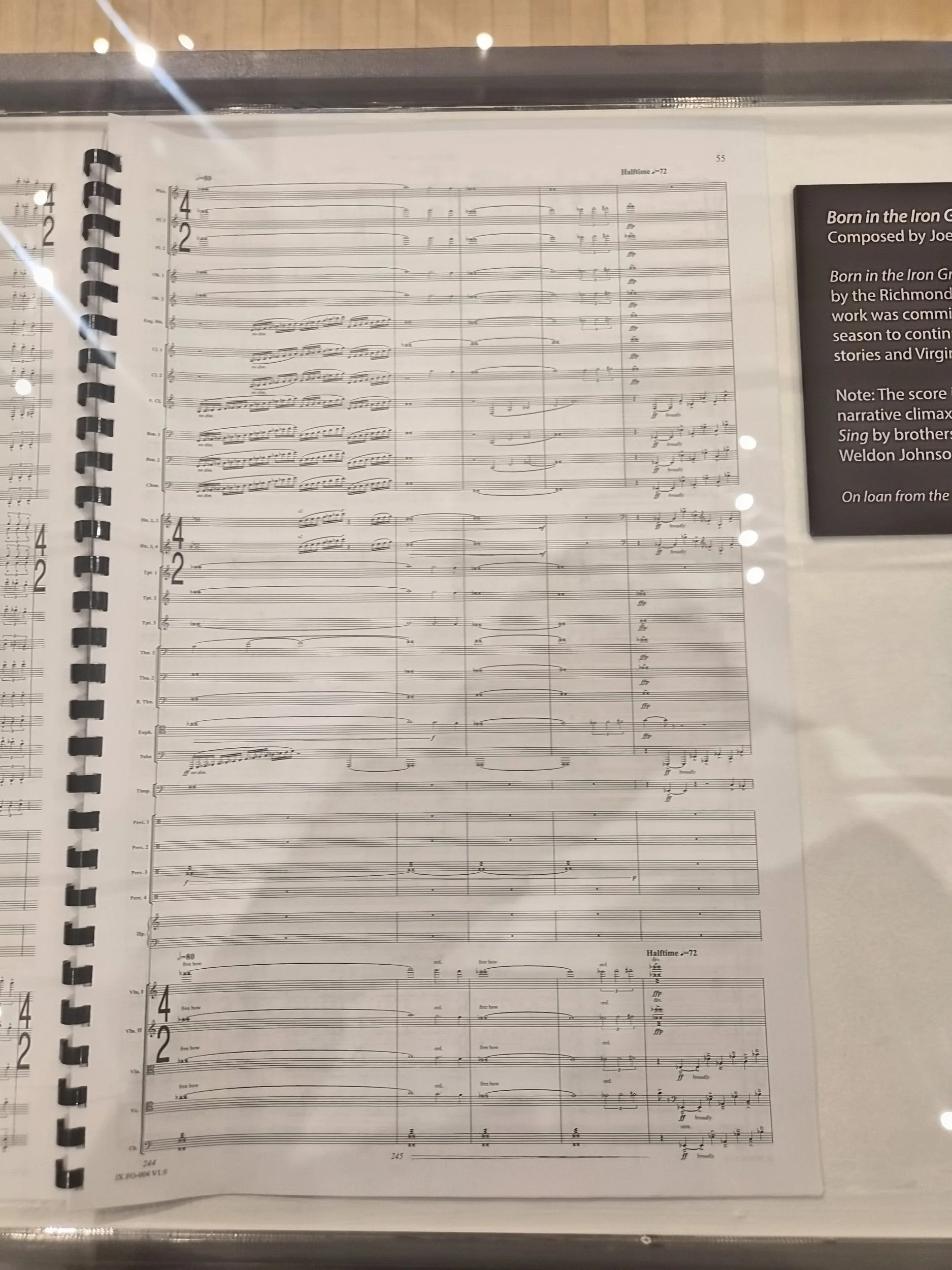
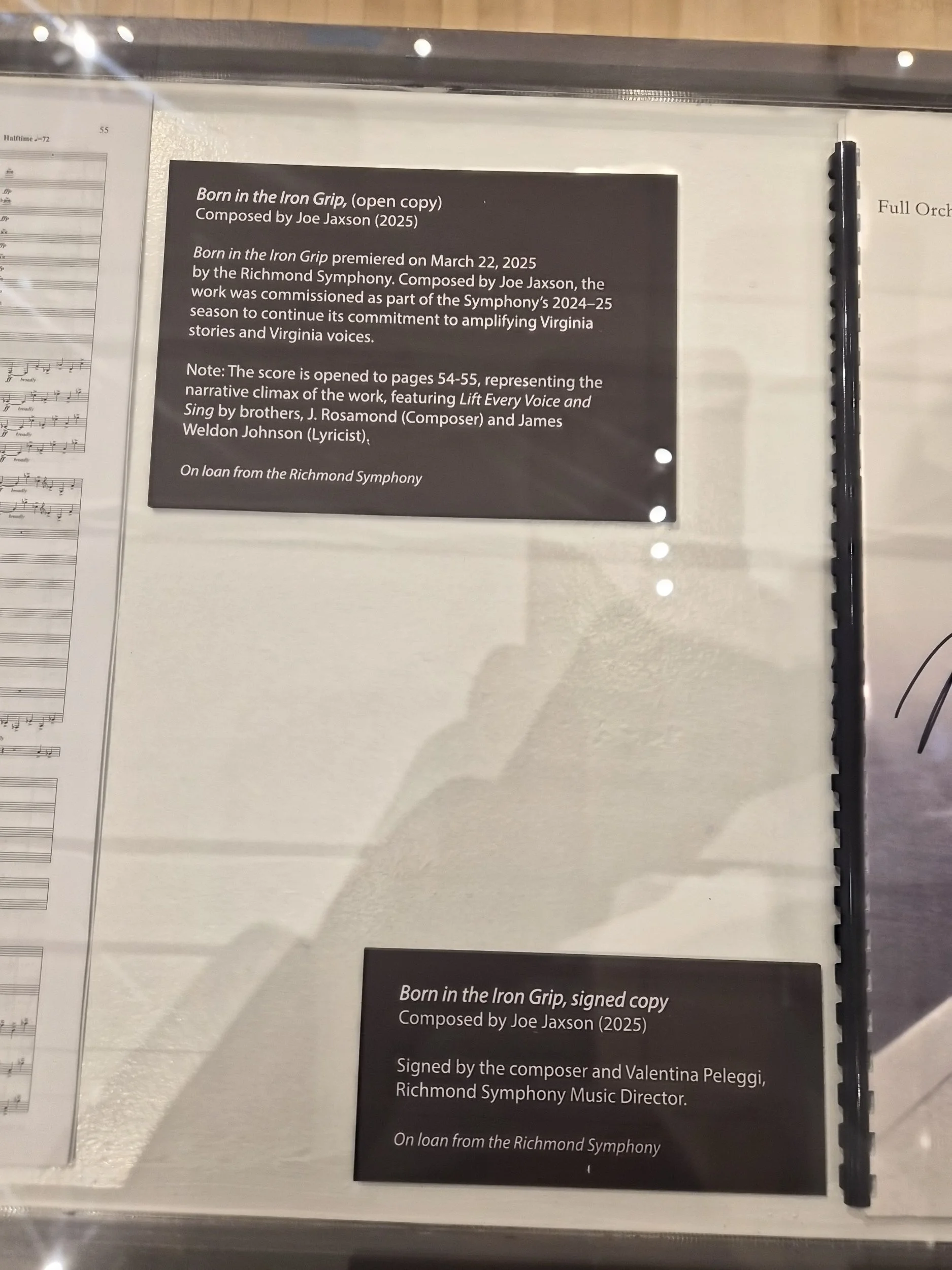
I had the honor of having the score and performance video showcased at the Black History Museum & Cultural Center of Virginia located in Richmond, VA. From Feburary 2026 to June 2026, the mueseum, led by Mary Lauderdale, opened a large-scale exhibit entitled, “Arthur Ashe: An Enduring Legacy.” It is an immersive, technology-driven retrospective honoring the life, activism, and global impact of the groundbreaking tennis champion and activist.
Visitors were able to watch and listen to the Richmond Symphony perform the last five minutes of my work while being able to peruse the signed scores by conductor Valentina and I opened up to the final climax of the work.
Press
Current Finalist for the 2026 American Prize in Orchestral Composition and Ernest Bacon Memorial Award for the Performance of American Music

The Team
Composer: Joe Jaxson | Conductor: Valentina Peleggi
Producer: Blanton Alsbaugh | Label: Bright Shiny Things
Recording Enginner: Ed Thompson | Mastering Engineer: Mark Donahue
Musicians: Richmond Symphony
Venue: Carpenter Theatre, Dominion Energy Center
The Story
Commissioned by Valentina Peleggi, Music Director & Conductor of the Richmond Symphony, “Born In the Iron Grip” celebrates Richmond born Arthur Ashe in the 50th anniversary of his Wimbledon Championship win in the Men’s Singles in 1975.
This 13 minute work aims to transports the listener to the courts of the Wimbledon Championship after an introductory section bringing Arthur into view. The title comes from a quote from his autobiography Days of Grace. The quote goes,
“I am an African American, one born in the iron grip of legal segregation...my inner most stirrings inevitably have to do [with] trying to overcome racism and other forms of social justice, with the search for dignity and power for blacks in a world so often hostile to us."
This composition utilizes the hymn “Lift Every Voice and Sing” depicting how Ashe’s talent in the tennis profession became a “voice” for the African Americans of his generation and community.
Why did I compose this?
When researching for this commission, I had a list of notable Richmond stories and Ashe’s stood out to me the most. I was raised in Staunton, VA, a couple hours west of Richmond.
While most of my music is not directly on the topic of social justice and change, I was patient to find the right time to make by artistic contribution to those conversations and thus the opportunity arose. The opportunity arose for me to celebrate Ashe’s life and legacy while bringing attention to the obstacles he faced in his wake. Another quote I found while researching helped me feel more confiddent not only in the what but how I can best participate in the debates and discussions of today; to be able to say something with the appropriate weight and is less likely to be ‘swiped away’ and ignored. Early in his career, Ashe was being criticized by many members of his own race in not participating in the protests and rallys during a critical time of the Civil Rights Era. Ashe’s response (paraphrased) to them was this:
“I don’t do it with my mouth. I do it with my racket.”
View the Full Score Below
The Music
I start the work with an immersive-sounding introduction to Arthur characterized and represented by the Euphonium. We hear the main theme and its motifs prominently as the theme passes through the solo trumpet, echoed by other members of the orchestra. After this introduction of Ashe and some of his characteristics, the piece moves forward to capture the setting of the Wimbledon Championship win in the Men’s Singles in 1975, facing off against Jimmy Connors. We hear excitement, groove, jubilee until interjections representing the common obstacles that are racism and injustice but that does not shake Arthur. The match continues from the audience perspective until it rapidly switches to Arthur’s. A stark contrast, focusing on only the ball and his mind, attempting to outsmart and tire his opponent. It is in this moment the piece begins its final section title “Champion” where we witness Arthur triumphantly coming out on top, with references to “Lift Every Voice and Sing” making the connection of how his voice was his talent, and by using that talent against injustice and inspired and continue to inspire many futures such as Serena Williams to become ‘voices’ for the black community.
Fun Facts & Easter Eggs
The very opening gesture of the work is a reference to the opening a beloved tune by Barry White, “Love’s Theme.” I did this to put in music that would have been popular during Ashe’s time. While I could not find what music he specifically liked, it was reasonable to assume a tune like Barry White would be playing since it entered mainstream in 1973 and the match being in 1975. Love’s Theme is important to me for I grew up on this track and many others. However, this one always has me drop whatever I was doing and pay attention. I believe this was one of the first songs that drew my ear towards that studio string orchestra sound.
This one is kind of a spolier if you have not listened to the work yet so beware! The main theme for Arthur Ashe does include a motif from the hymn “Life Every Voice and Sing.” Upon subsequent listenings you will be able to make out the motif first in the Euphonium solo and again in later sections.
